Why Water tank Cleaning is Essential in Urban Cities?
Water tank in reality , acts as a giant settling basin. Over time, physical, chemical, and biological contaminants build up inside, turning a storage unit into a breeding ground for bacteria.
Here is exactly what happens inside an uncleaned tank and why regular cleaning is non-negotiable.
What Happens Inside an Uncleaned Tank?
Even if the incoming water looks crystal clear, it carries trace elements that settle when the water sits stagnant.
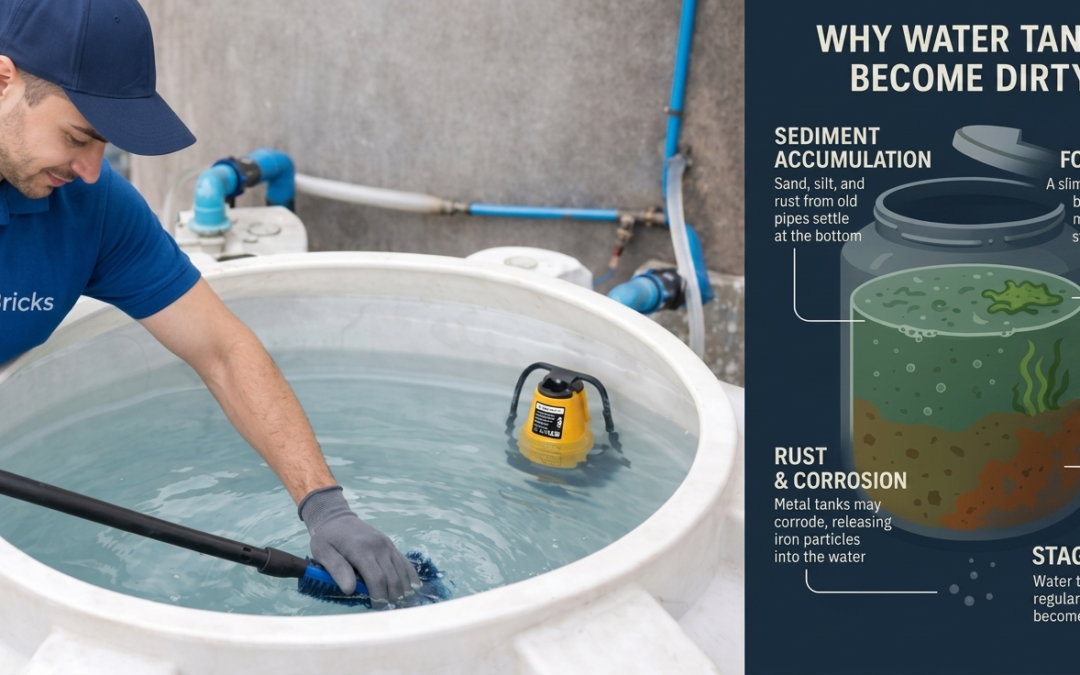
As shown in the diagram, several distinct layers of contamination form over time:
-
Sediment Accumulation: Sand, silt, and fine mud particles enter through the supply lines and sink to the bottom, forming a thick layer of sludge.
-
Biofilm Formation: Microscopic bacteria and fungi attach to the tank walls, creating a slimy, sticky layer. This biofilm protects harmful microbes from the trace chlorine meant to keep the water safe.
-
Algae Growth: If any sunlight penetrates the tank (even through a minor crack or a loose lid), it triggers rapid algae blooms, which deplete oxygen and ruin water taste.
-
Rust & Corrosion: Older plumbing or metallic components corrode, shedding iron and heavy metal particles directly into the water supply.
-
Stagnation: Water that doesn’t cycle perfectly leaves dead zones where bacteria thrive undisturbed.
The Major Risks of Skipping Cleaning
1. Waterborne Diseases & Health Risks
The sludge and biofilm at the bottom of a tank are prime real estate for dangerous pathogens. Bacteria like Legionella (which causes severe respiratory issues), E. coli, Salmonella, and parasites like Cryptosporidium thrive here. Even if you don’t drink the water directly, you use it to brush your teeth, wash dishes, and bathe. Showering in contaminated water can lead to skin irritation, hair fall, eye infections, and respiratory issues from inhaling vaporized water droplets.
2. Plumbing Plumbing and Appliance Damage
When the sludge layer at the bottom grows too deep, it gets sucked into the outlet pipes. This sediment travels straight into your home, resulting in:
-
Clogged tap aerators and showerheads, dropping your water pressure.
-
Accumulation inside water heaters (geysers), reducing their heating efficiency and causing early heating element failure.
-
Choked filters in water purifiers (RO systems) and washing machines, forcing expensive, premature filter replacements.
3. Structural Tank Damage
Algae, chemical deposits, and scale buildup don’t just sit there—they actively degrade the tank material. In concrete tanks, acid-producing bacteria can leach into the walls, causing structural weakness and cracks. In plastic tanks, heavy sludge makes it harder to identify structural compromises or leaks until a catastrophic failure happens.
Recommended Cleaning Frequency
The Golden Rule: A water tank should be thoroughly cleaned and disinfected at least once every 6 months.
If your area receives highly turbid (muddy) water, or water with a high mineral content (hard water), this window drops to every 3 to 4 months.
Repairbricks provides Professional cleaning Cleaning of tank that goes far beyond just draining the tank; it involves mechanical scrubbing, high-pressure vacuuming to remove sludge without scratching the walls, and antibacterial chemical disinfection (usually using precise chlorine ratios) to strip away the stubborn biofilm layers.
Thanks for reading our Page.
Repairbricks